


The global fuel crisis is also hitting Pakistani sports events badly, besides other sectors.
The latest casualties of the global crisis now affecting Pakistani sports are that the National Road Race Cycling Championship has been postponed, and the Asian Football Confederation Asian Cup qualifier between Myanmar and Pakistan would now be played behind closed doors in Islamabad.
Earlier, the country’s premier sports event, the Pakistan Super League (PSL), a franchise cricket event, was also forced to begin its season without the crowds in the stadium on March 26, and the venues were reduced to only two, with Karachi and Lahore hosting the matches.
The US/Israel war on Iran caused the closure of the Strait of Hormuz, which provides 20 million barrels of oil and has been crucial to transporting the oil and roughly 20 percent of the Liquefied Natural Gas from the Gulf countries to the rest of the world.
“We wanted to hold the National Road Race Cycling Championship in Islamabad,” the Pakistan Cycling Federation President Syed Azhar Ali Shah told Lost on the Desk. “ You can see that many cricket activities were also forced to wind up, so we were also put in a position where we had to postpone the National Championship.
“Our event was to take place in Islamabad, while the cricket matches for PSL that were to take place in Rawalpindi were also cancelled and moved. So we are facing several challenges to continue with our scheduled sports event.”
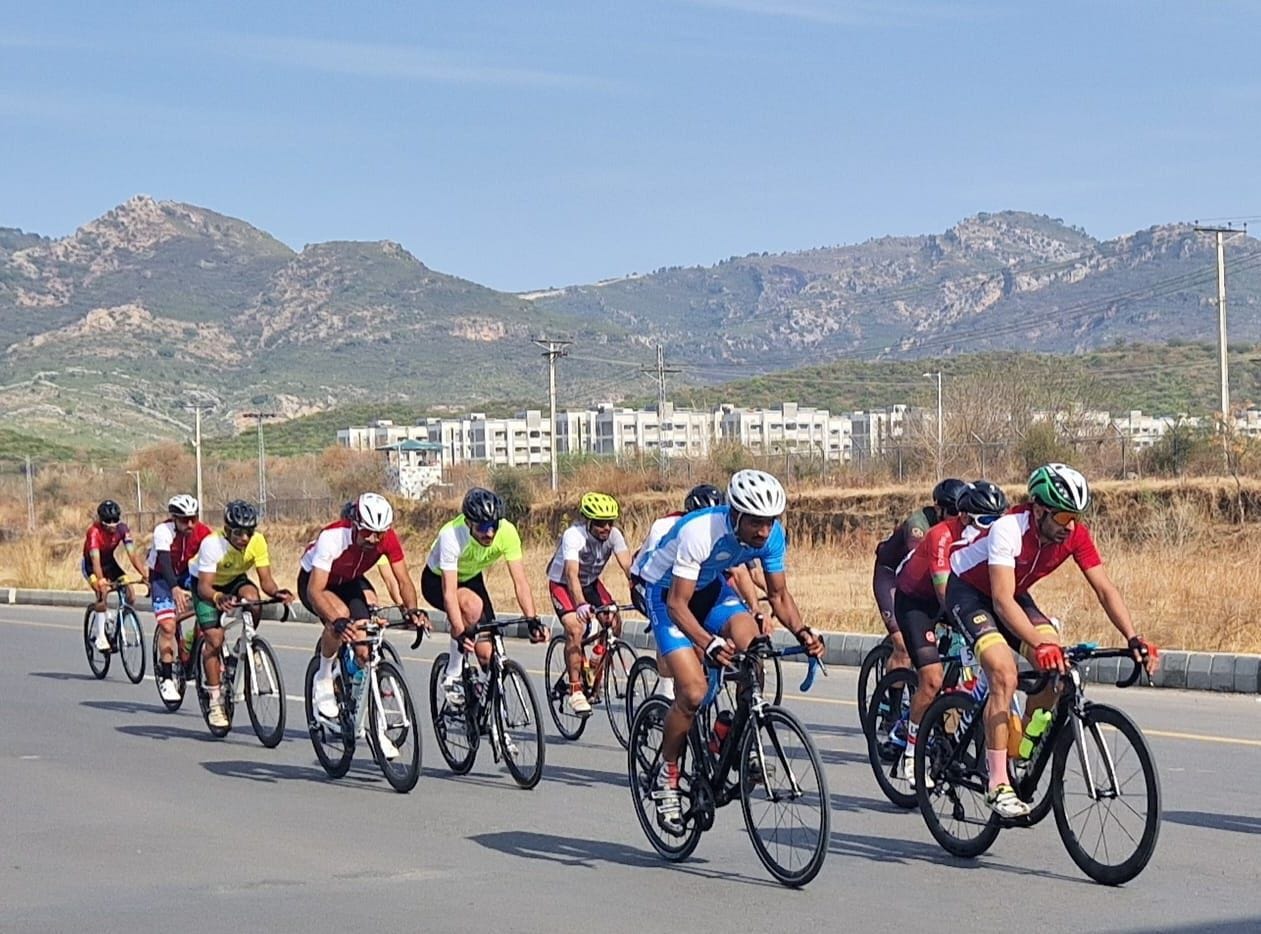
The national cycling championship was poised to feature 120 cyclists from different departmental teams and cycling clubs of the country, featuring the top talent. It was scheduled to take place from April 2 to April 5, but ‘the decision has been taken in the interest of safety and proper event management’, announced the Pakistan Cycling Federation.
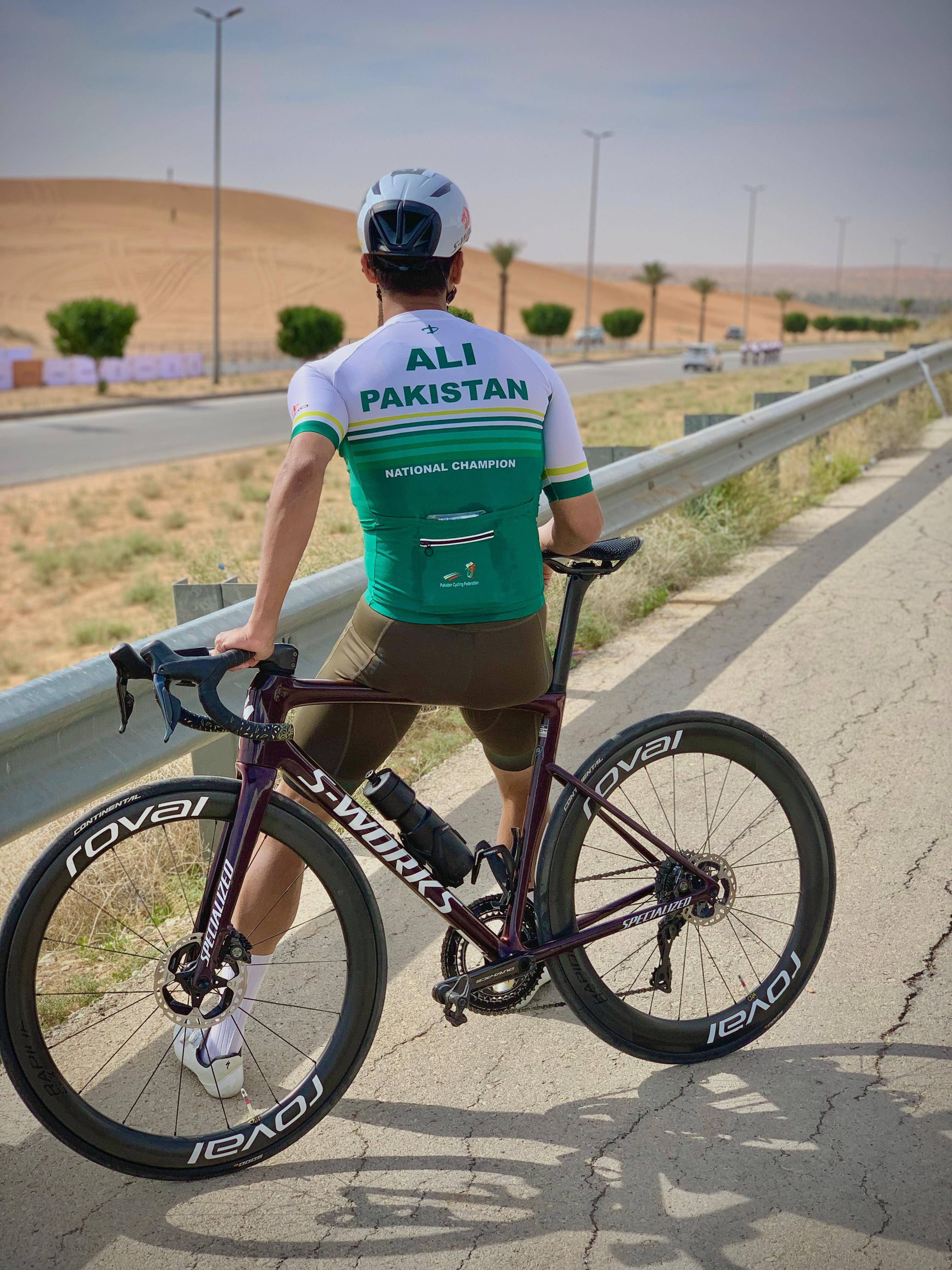
This race was crucial for cyclists like the Asian champion Ali Ilyas Jawaid. He added that the Pakistani athletes already face the dearth of local events and international exposure.
Azhar cited the security concerns, as the provinces of Khyber Pakhtunkhwa and Balochistan, too, are affected by the regional geopolitical crisis.
“We can’t hold it in Khyber-Pakhtunkhwa, then we can’t do it in Balochistan either. Now, Islamabad is also off limits to hold the event.
“It is such a big setback for the cyclists and for us because this was the last event of the season.
“This is the peak time for us to hold road events because after this, the weather becomes too challenging with heatwaves that we can’t safely hold the events.
“We are now hoping to hold this championship in Gilgit in June because the weather there will be pleasant.”
Azhar added that the austerity policy from the government, with businesses also implementing cost-cutting measures, has caused sponsors to back off from the event, too.
Similarly, the Pakistan Football Federation sent out a notice on March 26 citing government policy as a reason to hold the AFC fixture behind closed doors and telling the fans who bought the tickets that they will receive refunds.
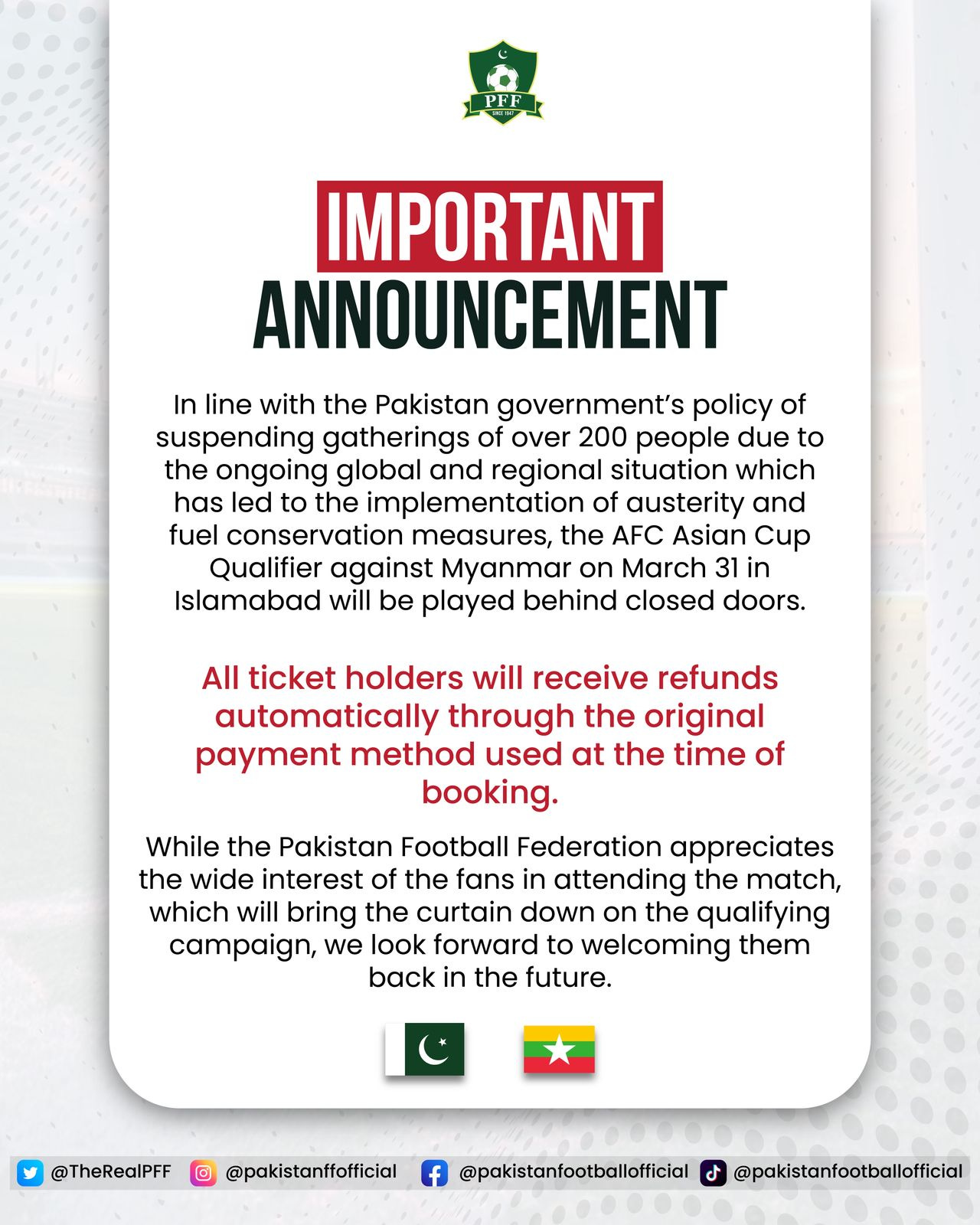
“In line with the Pakistan government’s policy of suspending gatherings of over 200 people due to the ongoing global and regional situation, which has led to the implementation of austerity and fuel conservation measures, the AFC Asian Cup Qualifier against Myanmar on March 31 in Islamabad will be played behind closed doors.
All ticket holders will receive refunds automatically through the original payment method used at the time of booking,” the press release read.
Earlier, the PSL also cancelled its opening ceremony.
Although the season will start on Thursday, the fans are urging the Pakistan Cricket Board to allow partial crowds at the matches.
In a country like Pakistan, where sports are an underdeveloped sector and require as much fanfare and facilitation to make sports a viable revenue-generating sector, the global fuel crisis and security concerns have been a let-down for the fans, athletes, and sports organisations alike.
But for now, when the world seems to be burning down thanks to the US-Israel-led wars that have already started to impact major international sports events like the FIFA World Cup, too, the fans and everyone engaged with sports can only hope for better days to come sooner rather than later.
The consequences of US-Israel invasion not only affect major sports events like the FIFA world cup, but also comparatively smaller scales ones like the PSL, the AFC qualifiers and the National Road Race Cycling Championship.
Other international events that have been called off include the Formula one races in Bahrain, Qatar, and Saudi Arabia, the AFC Champions League playoffs, tennis events like ATP tournaments in the Gulf and the US withdrawing from the FIH Hockey World Cup qualifier in Egypt.
For now, no one can anticipate how this war will affect the local and international sports calendars.