


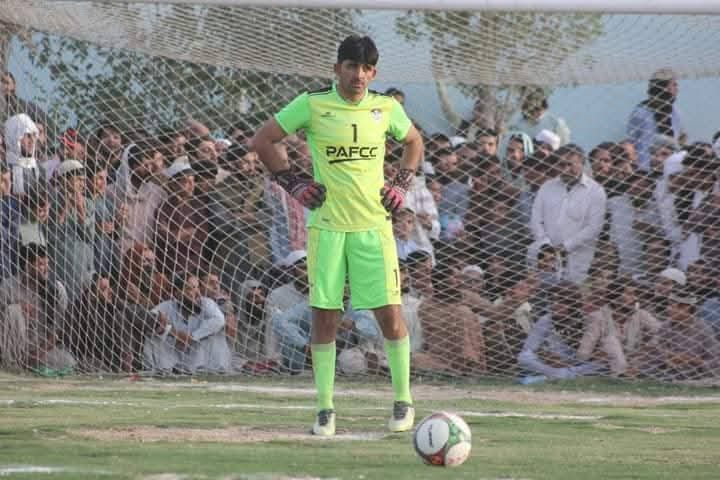
Playing football has been an art for the people of Chaman. They say when a child opens his eyes, football is one of the first things he sees. It is a city in Pakistan’s Balochistan province that shares a border with Afghanistan.
It has given Pakistan one of the best rivalries in the country in the form of Afghan FC and Muslim FC, clubs that have been run entirely by their communities.
the rivalry that lit up the Pakistan Premier League when it used to happen, the last edition of it took place in 2019.
Even now, crowds gather in Chaman just to watch football like nowhere else in the country.
This place has been a feeding ground for talent to make it to the national team and departmental sides, for example, Essa Khan and Kaleemullah, among many others, despite limited facilities and even little financial support for the footballers.
However, resilience becomes a curse and a burden when a community is left ignored.
And the Chaman football community is in dire need of attention.
They are bearing the brunt of a war that is hurting people on both sides.
It looks like no one can help the current and former footballers, including those who have seen better days, representing Pakistan internationally, from the economic difficulties caused by the vagaries of war between Pakistan and Afghanistan, which feels never-ending at this point.
Pakistan escalated the matter, according to Afghanistan, by killing around 400 civilians in an airstrike at a drug rehabilitation facility in Kabul last week during the holy month of Ramadan.
Although the two states have decided to pause the war due to Eidul Fitr, a religious festivity celebrated by both Muslim countries.
Eid was just a ritual that needed to be performed sans celebrations in Chaman, as people do not have the means to survive and feed themselves, including footballers like Jahangir Khan, and others who have been working as labourers to manage their day-to-day expenses by crossing the border.
“Living a life of an international footballer was certainly a dream; it is something every child in Chaman is born with.
“We open our eyes and see football, sure it gave me some good years, but now, I have been facing tough a economic situation because the Pak-Afghan border has been closed for the last six months, we don’t know what to do, because we used to cross the border and sell some goods to get by,” former Pakistan goalkeeper Jehangir Khan told Lost on the Desk on a Ramadan night last week.
Everyone in his family plays football. He calls it a family trait.
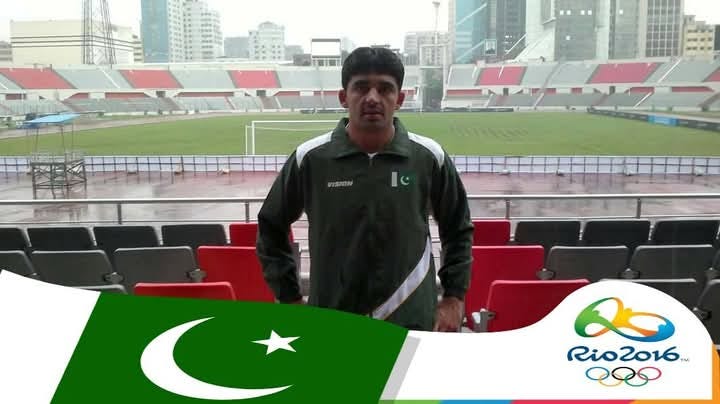
Jehangir is a small-scale seller of cosmetics that he would take from Chaman across the Afghan border and make a living to support his family, which includes his six young children.
He pointed out that he has met many Afghan footballers across the border, too, who have been forced to work as labourers or sellers of different goods to survive the increasing poverty and the lack of opportunities in the region.
“I can tell you that the times are tough and with every passing day, they are getting tougher,” explained Jehangir.
The goalkeeper represented the country at the FIFA World Cup qualifying rounds in 2007, before that he played for Afghan FC Chaman and later joined K-Electric, where he was forced to end his career because of the absence of domestic tournaments due to infighting among the Pakistan Football Federation officials, which led to several bans from FIFA from 2015 till 2022.
Jehangir, much like Jadid Khan, who has also captained the Pakistan U23 team and played for the country, had to see most of his playing years go to waste thanks to precarious Pakistan Football Federation affairs and the subsequent folding of departmental teams.

The departmental sides were providing a steady income to the players, making it the most professional version of football they could access within Pakistan’s semi-professional set-up.
“The thing is, there is no alternative for the players coming from places like Chaman.
“We spent our entire lives around football and tried to make a living through it, but when the departmental sides chose to let us go and dismantled the teams we were left with no choice but to pick up odd jobs, there is nothing much in Chaman, so this fight with Afghanistan and the closing of the border has made our lives so difficult,” Jadid added, he was dismissed by Sui Southern Gas Company in 2022.
“Most of our footballers, even those who have represented Pakistan like me internationally and played at the top national level like the Pakistan Premier League, had tough times after 2015.
“Now most of the footballers would cross the border and go to Afghanistan in the morning to sell some goods there and return to Chaman with goods they collected from there to sell in their local area, and that was how they were able to feed their families.
“But to carry on with their love and passion for football, they train and play in the evening after work, in the hopes of returning to the game properly in some capacity at some point in the future.
“The bottom line is that the footballers and athletes are in an extremely unfortunate situation because there is no alternative and there are no jobs or salaries, and whatever that they were trying to earn honestly with hard work is now out of reach because of the conflict between Pakistan and Afghanistan.
“Our entire system and economic activity were linked to the border, but now it is incredibly difficult to make ends meet.”
Jadid also pointed out that some footballers have left for other places to work as labourers, like brothers Hameed and Hanif Khan. They left for Dubai a month ago.
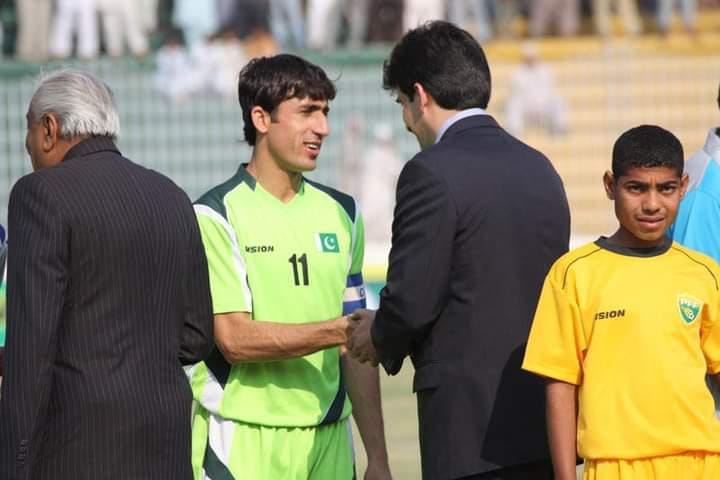
However, things are getting increasingly difficult for Jehangir, who has to take care of the family without any means of income.
While unemployment, and restrictions on the border are making Jehangir’s life miserable, he still tries to give back to his community by training players at Essa Khan Football Academy, where his expertise as a goalkeeper helps youngsters who might chose to pick up the gloves.
At times, like Jadid, Jehangir plays at local tournaments that offer prize money to participating teams, for example, the All Balochistan Gold Cup that took place in December 2025.
He played two matches in the tournament but sustained injuries and had to drop out.
“I am getting old now, but still I play,” said Jehangir, who is also the brother of former Pakistan football captain and once a top-scorer for Pakistan Essa Khan.
Looking back at his own career in football, he recounts how playing international matches and travelling fulfilled his lifelong dream, but then reality began to fracture once regular football activity was disrupted in 2015.
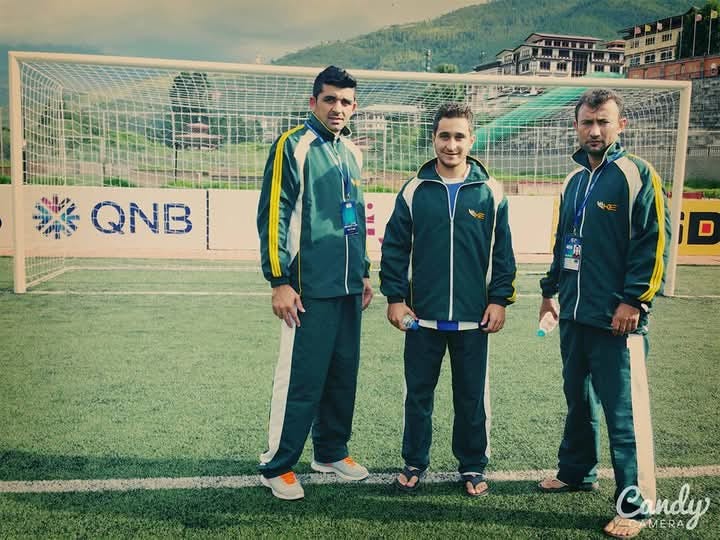
The 38-year-old does not receive any money from the academy, as it is solely run on a self-help basis, and the goal is to just keep the younger players engaged with football in his absence.
“I have travelled with the team to Bangladesh, Bahrain, Singapore, and Sri Lanka.
“I felt there was so much scope from 2007 till 2014, but then it comes down to the fact that there are no proper pathways to sustain a decent life while pursuing football in Pakistan,” said Jehangir like a man who understands that sports has a potential to change peoples lives, but it is not changing the lives of the players in Chaman any time soon.
Where is Pakistan Government or even Pakistan Football Federation when the football community need it the most?
In fact, both Jehangir and Jadid understand that the phantasmagorical quality that football once possessed for them, both on the field and off of it, has vanished for them with the realisation that the passion for the beautiful game is not the answer to difficult times.
Football has been a most cherished means of coping with the harsh realities of life, but as it stands, it cannot supply the people of Chaman with the stable livelihood they desperately need now.
The Pakistan Football Federation and the Government of Pakistan must step up and implement programs for the well-being and growth of the athletes in Chaman while recognising how football is an intrinsic part of their identity.
“There is a lot of heartbreak. We do warn the youth of how limited the options for the future become if they only stick to football,” said Jehangir.
Jadid echoed Jehangir’s parting message as well, especially to the new and shiny Pakistan Football Federation, which elected Mohsen Gillani as the president after elections conducted by the FIFA-appointed Normalisation Committee last year.
It is to note that the history of the Normalisation Committee is extremely murky, with shady self-serving characters taking on the role of leading it since it was appointed by FIFA in 2019.
“We need the departmental system; there can’t be an alternative with the franchise system right now, because the franchise system does not guarantee anything beyond basics.
“We want to request the Pakistan Football Federation to help build our futures, and the futures of footballers across the country, by actually running a proper league and getting departments back to hiring the youth. That system gave us employment with labour rights and benefits,” said Jadid.

The Chaman players got a taste of a national tournament at the National Challenge Cup, where Pak-Afghan Clearing Agency competed in February, but behind the scenes, they are not paid any compensation as players, and it is not a proper department or club that can take care of the athletes because it does not have a proper backer or government affiliation.
It is only fair to expect the Pakistan Football Federation to at least reach out to the footballers in Chaman. So far, despite claiming that the body would keep an athlete-friendly, community-building approach, they have failed to even acknowledge or consider what footballers in Chaman are going through in recent times.
“We have not heard anything from the Pakistan Football Federation or local associations in Balochistan. Nothing has really happened for us since the new body has gotten elected, so we don’t know if they are even thinking of us,” said Jadid.